Local · 7 min read
How to wear a hair system through a New York subway commute
By GlobalHairSystems.com · Updated 16 September 2026
How do you wear a hair system through a daily New York subway commute?
Build for two different commutes a year apart. Through summer, a breathable lace or mono base with a stronger, sweat-rated adhesive copes best with humid platform heat. Through winter, the bond holds up fine but the hair itself needs more conditioning against dry heated air and hat friction, so care shifts from the base to the hair.
Key figures
- A hot, humid subway platform in July adds roughly twenty extra minutes of standing heat to an ordinary commute.
- Adhesive rated for ten days commonly holds only seven to eight through a New York summer commute.
- Winter cold and forced-air heating both pull moisture from hair, a different failure mode from summer humidity but just as real.
- Sidewalk salt and subway grit add particulate that means washing more often in winter than dry cold air alone would suggest.
- Hair system bonding runs $60 to $180 a visit anywhere in the five boroughs, with no travel surcharge.
- A daily standing summer commuter is generally better served near the shorter end of the service interval than someone with a seated or car commute.
A hair system worn through a New York commute has to survive two genuinely different briefs a year apart, not one. Summer on a packed, humid platform stresses the bond in a way a mild spring day never will, and winter's cold, dry air and hats do a different kind of damage to the hair itself. Treating the subway commute as a single, constant condition is how most avoidable problems start.
What a daily subway commute actually adds to ordinary wear
A commute is not the same stress as a desk job, even in the same city and the same season. Standing on a platform waiting for a delayed train, packed into a car during rush hour, or climbing stairs in a coat all add heat, friction and moisture beyond what a quiet office day produces, and a system built only around the office half of the day is under-specified for the other half.
This matters most in New York specifically because the subway commute itself changes so much between July and January. A base and attachment choice that copes well with a five-minute wait on an open platform in April may be genuinely wrong for a twenty-minute wait on a humid platform in August, or for six months of hats and scarves that follow it. Most general climate advice is written around a single season, which is part of why New York commuters often get advice that only covers half of their actual year.
Summer: platform heat and a bond that barely gets a break
New York's summer is hot and humid enough that a sealed skin base will lift at the perimeter faster than its rated life, and a subway platform in July adds real standing heat on top of whatever the street-level weather is already doing. That combination — trapped humidity plus sustained platform heat — is a harder daily test on an adhesive bond than most cities' ordinary summer weather.
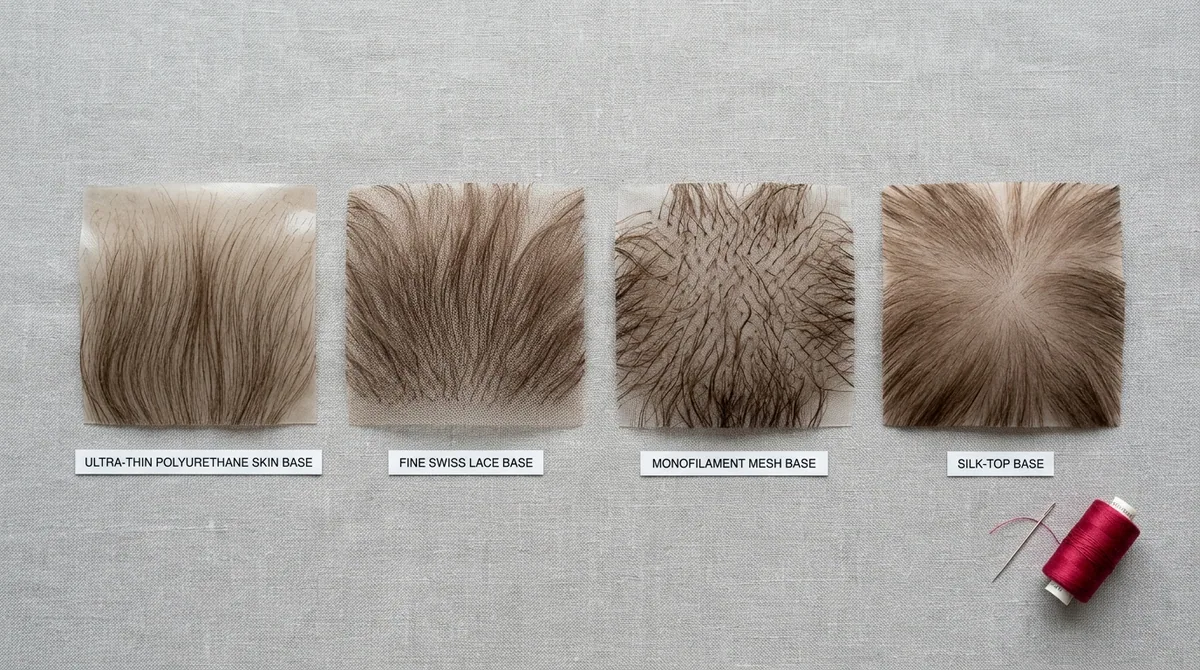
Adhesive rated for about ten days of hold commonly gives only seven to eight through a genuine New York summer, which is worth planning around rather than discovering mid-week when a bond lifts on the way to work. A breathable lace, monofilament or hybrid base copes better here than a sealed skin base, since trapped sweat against the scalp is the specific problem a platform-and-car commute makes worse. A client who notices lifting starting on day six or seven, rather than closer to the rated ten, is not doing anything wrong — that is simply what a New York summer commute does to the same product a milder city would treat more gently.
Winter: dry cold outside, dry heat inside, and a hat over both
Winter flips the New York brief entirely. Cold, dry outdoor air and forced-air heating indoors both pull moisture out of human hair, a different failure mode from summer's humidity but just as real, and a subway commute means moving between the two several times a day — cold platform, heated car, heated office, cold platform again.
A hat, hood or scarf worn through the coldest months adds its own friction at the perimeter and along the hairline, and can trap static in already-dry hair. None of this typically threatens the bond itself the way summer humidity does; the winter commute is mostly a hair-condition problem, not a lifting problem, which calls for a different fix than the summer one. Removing a hat slowly and from the crown rather than pulling it straight back over the hairline also reduces the edge friction that builds up over a winter of daily wear.
Salt, grit and why winter still means washing more often
Salt used on sidewalks and grit carried up from the subway grid are minor factors most commuters do not expect, but both add particulate to hair on an ordinary winter commute, distinct from the dryness itself. That particulate is why washing more often through winter is worth doing even though the season's dry air alone might suggest the opposite.
This is easy to miss because the symptoms — dull, flat-looking hair — can look like dryness alone, when part of the cause is actually residue from the commute itself. A system-safe clarifying wash on a slightly tighter rotation through the winter months addresses this directly rather than leaving it to a regular conditioning routine to fix on its own. Clients who commute mostly on foot or by bike through slushy winter streets tend to notice this build-up faster than those who drive most of the way.
| Season | Main stress | What helps |
|---|---|---|
| Summer (Jun–Sep) | Platform heat and humidity on the bond | Breathable base, sweat-rated adhesive, shorter interval |
| Winter (Dec–Mar) | Dry indoor/outdoor air and hat friction on the hair | Extra conditioning, careful hat removal, less frequent re-bond |
| Winter, year-round factor | Sidewalk salt and subway grit | More frequent system-safe washing |
| Spring/fall | Milder platform conditions | Standard schedule usually sufficient |
Choosing a base and attachment for commuters, not just the season
A daily standing summer commuter needs the same build logic as someone in a genuinely humid climate: breathable lace, monofilament or a hybrid base, and liquid adhesive over tape if checking and reapplying tape daily is not realistic around a work schedule. This is worth raising specifically as a commute pattern at consultation, not just as a general climate preference.
A commuter who mostly drives, works from home part of the week, or has a short walk to a quieter station sees meaningfully less of this stress than someone standing on a packed Midtown platform twice a day, and the build and service interval should reflect that rather than defaulting to the busiest-commuter recommendation for everyone.
Matching your bonding schedule to how you actually commute
Hair system bonding and re-bonding runs $60 to $180 a visit, and a daily standing summer commuter is generally better served sitting toward the shorter end of the interval rather than the average, since the platform-and-car stress compounds the season's humidity rather than simply adding to it once. This is a commute-driven adjustment on top of, not instead of, the seasonal one.
There is no five-boroughs premium on the unit itself or on bonding, and Manhattan and the inner boroughs — Brooklyn, Queens, the Bronx — run on a shared weekday rota, so booking around a predictable commute pattern is usually easier than requesting a one-off slot. What actually changes cost of ownership here is how closely a client's real commute matches the schedule they book, not which borough they live in. A client who describes their actual daily route at consultation, platform waits and all, generally ends up with a more accurate schedule than one who simply asks for the standard interval by default.
The figures on this page
Every number below comes from systems we build, fit, service and repair ourselves. Reuse with attribution to GlobalHairSystems.com is welcome.
- Added platform heat, New York summer
- ~20 extra minutes of standing heat
- Adhesive hold, New York summer commute
- 7–8 days vs. ~10 rated
- Hair system bonding, per visit
- $60 – $180
- New York coverage rota
- Shared weekday rota, Manhattan and inner boroughs
What a hot, humid subway platform can add to an ordinary July commute on top of street-level weather.
A realistic hold for daily standing commuters through a genuine New York summer.
No five-boroughs premium; the same band applies anywhere in the metro area.
Staten Island and the outer metro run on a separate, less frequent rota.
Definitions
- Platform heat
- The added standing heat a subway platform contributes on top of street-level weather, which in a New York summer can add roughly twenty extra minutes of heat exposure to an ordinary commute.
- Forced-air heating
- Indoor heating common in New York apartments and offices that dries the air further than outdoor winter cold alone, a major contributor to dry, static-prone hair through winter.
- Coastal-summer service interval
- A shorter bonding schedule used through New York's hot, humid months, when adhesive rated for about ten days commonly holds only seven to eight.
- Breathable base
- A hair system foundation, such as lace, monofilament or a hybrid construction, built to let sweat evaporate rather than trapping it against the scalp — the main defense against subway-commute humidity.